
How to Identify and Fix Operational Bottlenecks in Your Service Business

By Michael Brittain, Managing Director & Founder, MiGA Growth Partners
Your business is growing. So why does everything seem to be taking longer?
More customers should mean more opportunity. But for many established service businesses, growth also brings more administration, slower decisions, missed handovers and an increasing reliance on the business owner.
The problem isn't necessarily that your team needs to work harder. It may be that the way work moves through your business hasn't kept pace with its growth.
These are often symptoms of operational bottlenecks.
The good news? You don't always need more people, new software or a major transformation programme to address them. Sometimes, identifying and improving one critical process can make a meaningful difference.
Here's how to find what's slowing your business down — and what to do about it.
What is an operational bottleneck?
An operational bottleneck is a point in a business process where work, decisions or information repeatedly get delayed, limiting how efficiently the overall process operates.
For example, a service business might have a capable sales team generating enquiries and a delivery team ready to undertake work. But if every proposal requires the managing director's approval, the business can only move as quickly as those decisions are made.
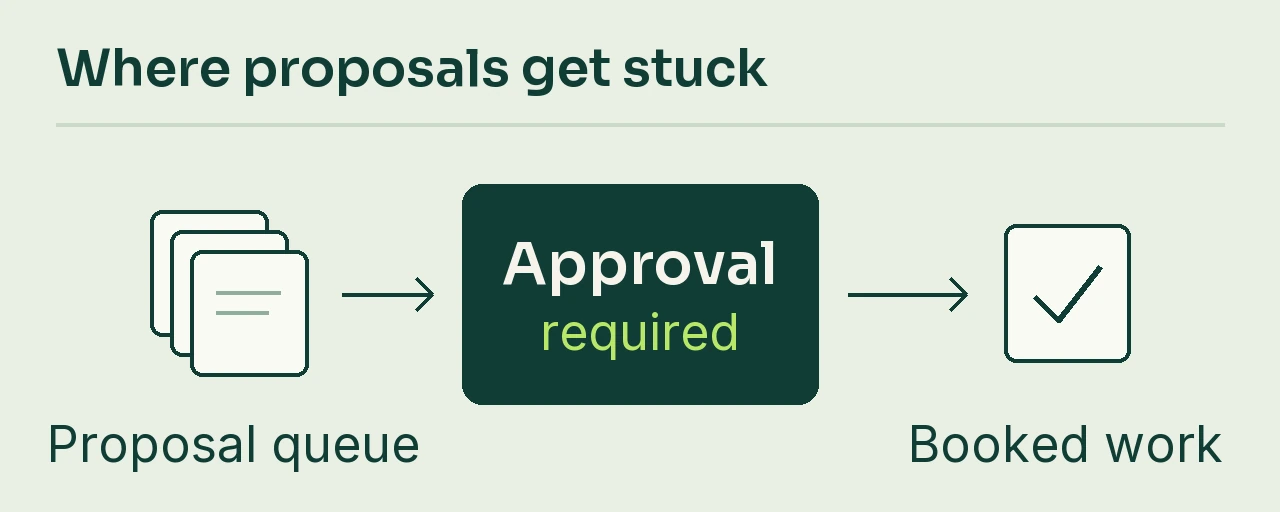
The problem isn't necessarily sales performance or delivery capacity. It's the process connecting them.
A bottleneck could involve:
- People: One individual making too many decisions or holding essential knowledge.
- Process: Repeated approvals, unclear responsibilities or unnecessary administration.
- Technology: Disconnected systems, duplicated data entry or unreliable information.
- Capacity: More work arriving at one stage than that stage can handle.
Understanding the difference matters. Hiring another employee or purchasing another system won't necessarily solve a problem caused by unclear responsibilities or unnecessary approvals.
Six warning signs your business has operational bottlenecks
Operational inefficiencies don't always announce themselves. They often become part of everyday working life.
Watch for these recurring patterns.
- Everything needs your approval. Routine decisions regularly reach the business owner or senior leadership team, even when the people closest to the work could reasonably make them.
- Information gets lost between teams. Sales agrees something with a customer, but delivery has to chase for the details before work can begin.
- The same information is entered repeatedly. Your team copies customer details between spreadsheets, emails, CRM systems and operational tools.
- Customer requests take too long to progress. Enquiries, quotations, onboarding or delivery remain stuck without an obvious reason.
- Your best people spend too much time firefighting. Experienced employees regularly resolve preventable problems rather than focusing on valuable work.
- The business slows down when someone is away. Critical knowledge or decision-making authority exists with one individual rather than being shared appropriately.
One instance doesn't necessarily indicate a systemic problem. The important clue is repetition.
Ask yourself: Where does work repeatedly stop, and what has to happen before it can move again?
What could an operational bottleneck cost your business?
Consider an illustrative example.
An established service company processes 20 customer handovers every week. Six arrive with missing information, requiring an average of 20 minutes each to investigate and correct.
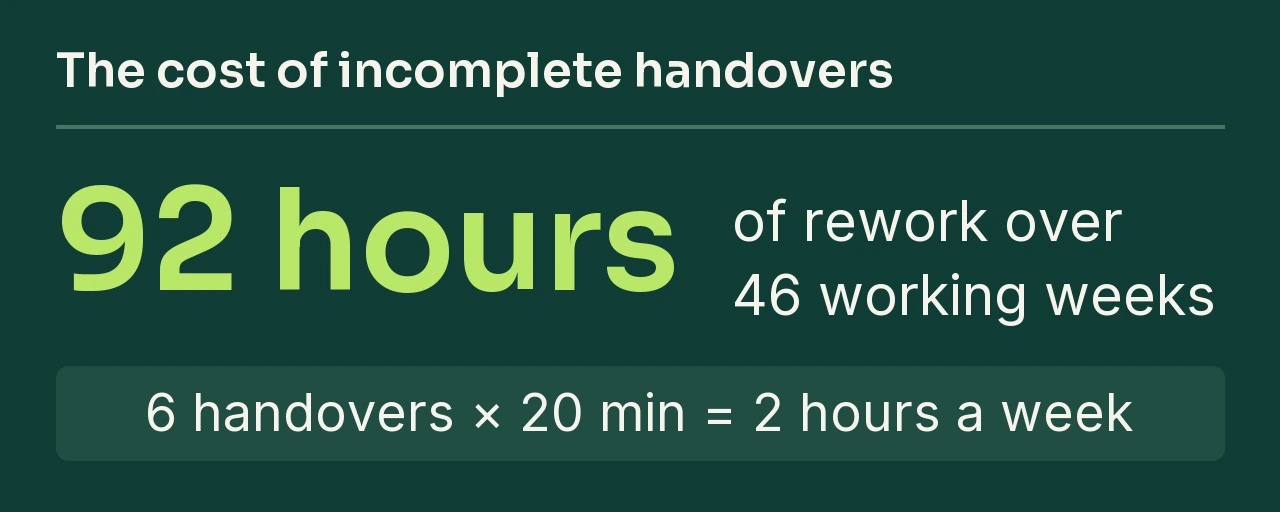
That creates:
- 120 minutes of avoidable administration each week.
- Approximately 2 hours spent chasing missing information.
- 92 hours of additional work over 46 working weeks.
That's more than two full working weeks of effort spent correcting something that might be preventable.
And that calculation doesn't include the potential impact on customer response times, delayed delivery or team frustration.
This example is illustrative, not a MiGA Growth Partners client result. Actual costs depend on the business and the work involved.
The point isn't that every business is losing the same amount of time. It's that small inefficiencies become more significant when repeated across a growing operation.
Before investing in solutions, establish what the problem is actually costing you.
How to identify and fix operational bottlenecks in five steps
You don't need specialist consultancy software to get started.
Choose one important workflow and apply the following approach.
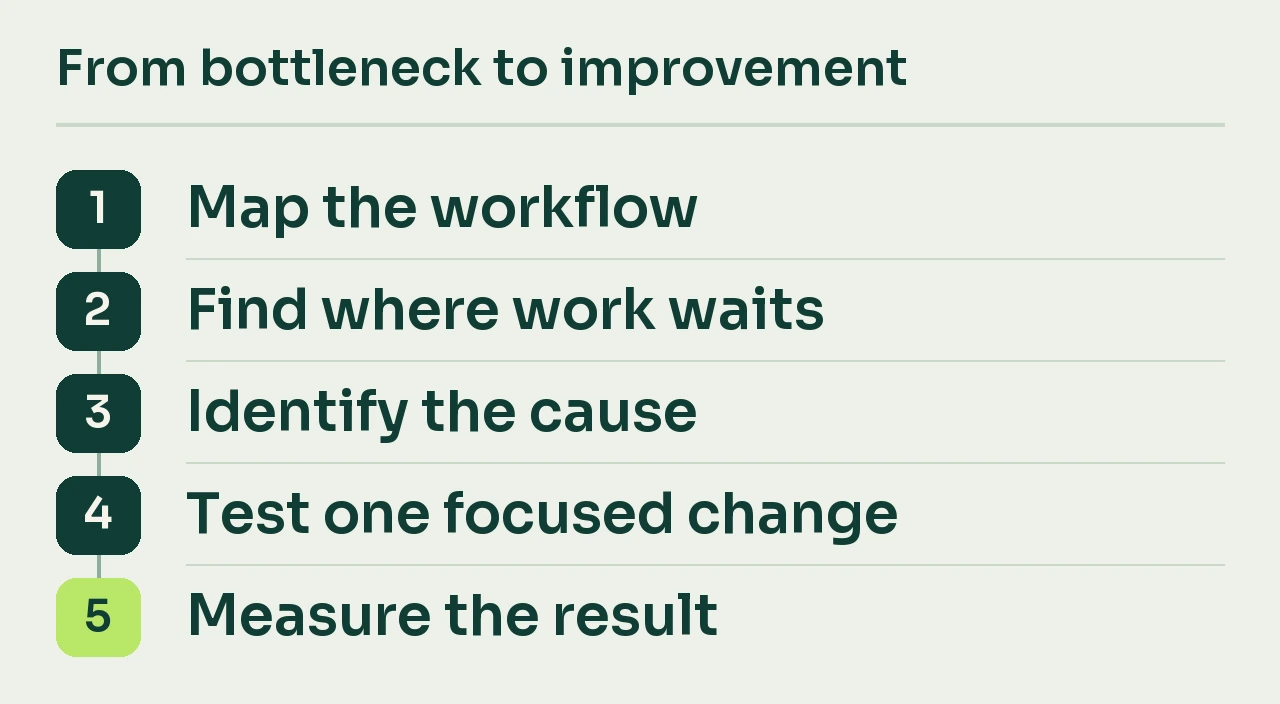
Step 1: Follow the work from beginning to end
Select a recurring process that appears to create delays or frustration.
For example:
Customer enquiry → Qualification → Quotation → Approval → Booking → Delivery
Write down what actually happens at every stage.
Who owns the task? What information do they need? Which systems are involved? What happens when something is missing?
Speak to the people doing the work rather than relying entirely on what you believe the process looks like.
The documented process and the real process aren't always the same.
Step 2: Find where the waiting happens
Look at a sample of recent jobs, enquiries or customer requests.
Identify where work spends the most time waiting, where corrections happen and which decisions regularly require escalation.
Useful measures include:
- Time from enquiry to first response.
- Time spent waiting for approval.
- Number of incomplete handovers.
- Frequency of repeated data entry.
- Time from customer agreement to delivery.
- Number of routine decisions escalated to the owner.
Focus on measures you can reliably collect and compare.
The objective is not to produce another management report. It's to understand what is slowing progress.
Step 3: Identify the real cause
A visible delay isn't always the underlying problem.
Imagine proposals regularly waiting three days for approval.
The immediate assumption might be that the managing director is too busy.
But look deeper.
Why does every proposal need approval? Are prices inconsistent? Are employees unclear about acceptable discounts? Does the team lack the information needed to make decisions confidently?
The real issue might be decision-making authority rather than management capacity.
Keep asking why the problem occurs until you identify something that can realistically be changed.
Step 4: Make one focused improvement
Resist the temptation to redesign everything at once.
Start with the constraint most likely to improve the overall workflow.
That might involve:
- Creating a standard customer handover checklist.
- Giving team members clearer decision-making authority.
- Removing an unnecessary approval.
- Introducing one reliable source of customer information.
- Automating a repetitive task once its underlying process is understood.
Assign an owner, agree what success looks like and test the change with the people who will use it.
Step 5: Measure whether the change worked
Compare performance against your original baseline.
Did the time waiting for approval decrease? Are fewer customer details missing? Is the team spending less time chasing information?
Check for unintended consequences too.
A faster sales process isn't necessarily an improvement if it creates more rework for delivery.
The aim is to improve the flow of completed work through the whole business, not simply make individual teams busier.
Are you becoming the bottleneck in your own business?
This can be an uncomfortable but important question for founders and managing directors.
In the early stages of a business, being involved in every decision often makes sense.
You know the customers, understand the commercial risks and have built the processes yourself.
But as the organisation grows, that same involvement can become a constraint.
If your team repeatedly needs your approval to make routine decisions, the business may struggle to operate efficiently without you.
The answer isn't to remove yourself from every decision.
It's to distinguish between decisions that genuinely require your judgement and those that could be managed by capable employees with clearer responsibilities, information and boundaries.
A useful exercise is to review the decisions you made over the last week.
Which required your expertise? Which were routine? Which could have been handled confidently by someone else?
Reducing unnecessary dependency on the founder can create more capacity for leadership, customer relationships and business development.
Why people, process and technology must work together
At MiGA Growth Partners, our approach to operational improvement centres on three connected elements.
People
Your team needs the right skills, clear accountability and the authority to make appropriate decisions. Even a well-designed process will struggle if nobody owns it.
Process
Work should move through clearly understood stages. Responsibilities, handovers and exceptions need to be defined without creating unnecessary bureaucracy.
Technology
Systems should make the process easier to operate, not introduce additional complexity. Automation is valuable when it removes genuine friction, but automating a poorly designed process can simply make existing problems happen faster.
The strongest improvements usually come from understanding how these three elements interact.
That's why buying software shouldn't automatically be the first response to an operational problem.
What real operational improvement can look like
The importance of connecting people, process and technology is something I've seen firsthand.
During my previous employment at MongoDB, I worked on business systems and operational processes supporting the journey from customer enquiry to account creation.
This work included improvements that reduced time to first contact from 96 hours to 14 hours and increased account matching accuracy from 55% to 98%.
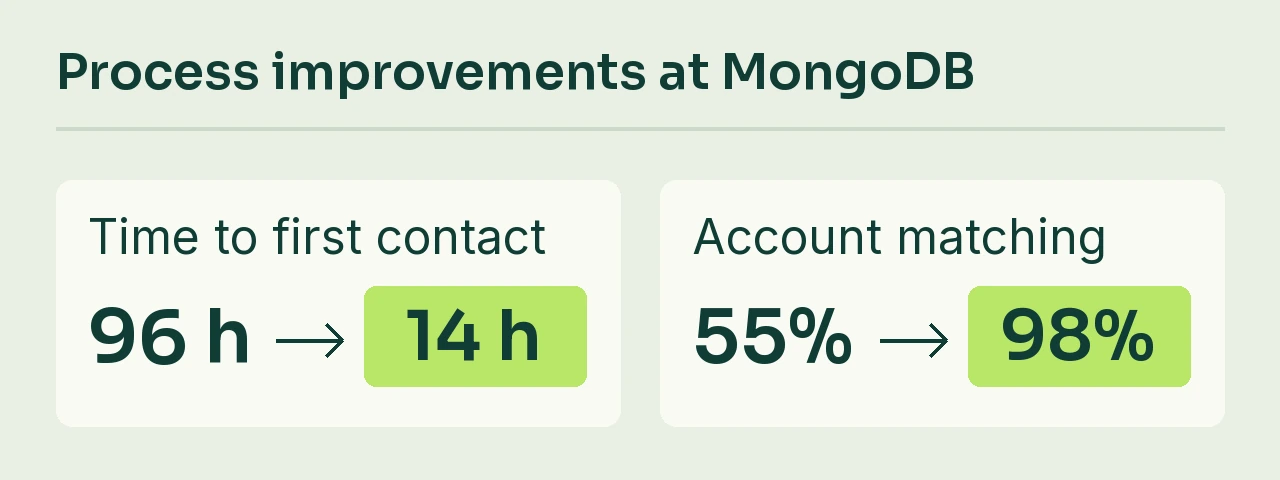
The wider lesson is that operational performance depends on more than choosing the right technology. It requires an understanding of how information moves, who needs it and where decisions are made.
These results relate to my previous employment at MongoDB, not to MiGA Growth Partners client engagements. MongoDB is not presented as a MiGA Growth Partners client or endorser.
Read more about my experience and approach.
When should you consider outside support?
Many operational bottlenecks can be improved internally once the cause becomes clear.
But external support can be useful when problems keep recurring, several teams are affected or leaders lack the time to investigate and implement changes alongside their existing responsibilities.
At MiGA Growth Partners, there are different ways to approach these challenges.
When you're not sure what's really causing the problem
A Growth Diagnostic provides a structured review of how your people, processes, systems and information work together, helping identify constraints and prioritise practical improvements.
When you know what needs fixing
A Transform Sprint focuses on a defined operational issue, with agreed outcomes, implementation and a handover your team can own.
When several connected changes need ongoing leadership
Fractional Transformation Director support provides senior ownership of an agreed transformation programme, with clear responsibilities and decision-making authority.
The right starting point depends on the problem. Not every business needs a large transformation programme.
Frequently asked questions
What is an example of an operational bottleneck?
A common example is a customer quotation process where every proposal requires one senior manager's approval. If requests arrive faster than that manager can review them, quotations accumulate and customers wait longer for responses.
How do you identify bottlenecks in a business process?
Follow one workflow from beginning to end, identify where work repeatedly queues or returns for correction, and examine the reasons behind those delays. Use actual examples and operational data wherever possible.
Can technology remove operational bottlenecks?
Yes, where technology addresses a genuine constraint. Automating data transfer or improving access to accurate information can reduce manual work. However, unclear responsibilities and unnecessary approvals may need process or leadership changes rather than new software.
How often should businesses review their processes?
Review important workflows when recurring delays appear, customer expectations change or growth increases the complexity of the work. Regular operational reviews also help identify emerging issues before they become major constraints.
Better business growth starts with understanding what's holding you back
If your team is working harder but the business doesn't seem to be moving faster, it's worth investigating where the friction sits.
Start with one workflow. Follow the work, identify the delays, understand their causes and test a focused improvement.
Small, evidence-led changes can make a meaningful difference to how a business operates.
And if you would value an independent perspective, MiGA Growth Partners can help.
Let's find out what's slowing your business down.
Book a free 30-minute introductory call to discuss one operational challenge and explore what a sensible next step could look like.
Free. No obligation. Just a practical conversation about your business.
About MiGA Growth Partners
MiGA Growth Partners is an Eastbourne-based Business Growth Consultancy working with established service and technology businesses across Sussex, South East England and the wider UK.
We help businesses increase sales, improve operations and use technology to unlock sustainable growth.